Introduction
I’ve been working on a new 2D pixel-art vertical shoot ‘em up for the Atari ST for nine months now, and I decided it was finally time to blog about it.
Personal history
Let’s start with a bit of personal history from the late 80s and early 90s. When I was a 13-year-old kid, my dad bought me an Atari ST 520+ (which had 1MB of RAM, as the ‘+’ sign designates) and a monochrome monitor (SM124) — thanks, Dad. I’m still grateful; you changed my life!
His primary motivation was the ST’s MIDI capabilities, since I already had a MIDI-compatible synthesizer. I had a lot of fun with it and did quite a lot of MIDI sequencing with Cubase.
Of course, I was also interested in games, but most games required a color monitor, which I didn’t have. I did play some games on the monochrome monitor, but most ‘serious’ games didn’t support it. It wasn’t until a few years later that I got a color monitor and could finally play the games I wanted to play.
When I got the ST, I already had a few years of experience with Basic programming on my trusty 8-bit Sharp MZ-800. Naturally, I started writing GFA-Basic programs on the ST.
My best friend Roberto, who turned out to have an incredible talent for pixel art drawing and music composition, bought an ST as well and soon we started making stuff together.
One of our fields of interest was game development. Like many kids (I presume), we dreamt of making our own games. We made some attempts at writing games in Basic/STOS, but we quickly realized that the performance of Basic was not good enough for the kind of games we wanted to make. Still, it was great fun and also a very educational process.
Some of the games we were particularly inspired by were the shoot ‘em up games like Xenon I and Xenon II. I knew I had to learn assembly programming to achieve the performance we needed for a game similar to Xenon, but it took a year or two before I finally started learning it. One other motivation was that we wanted to start making demos.
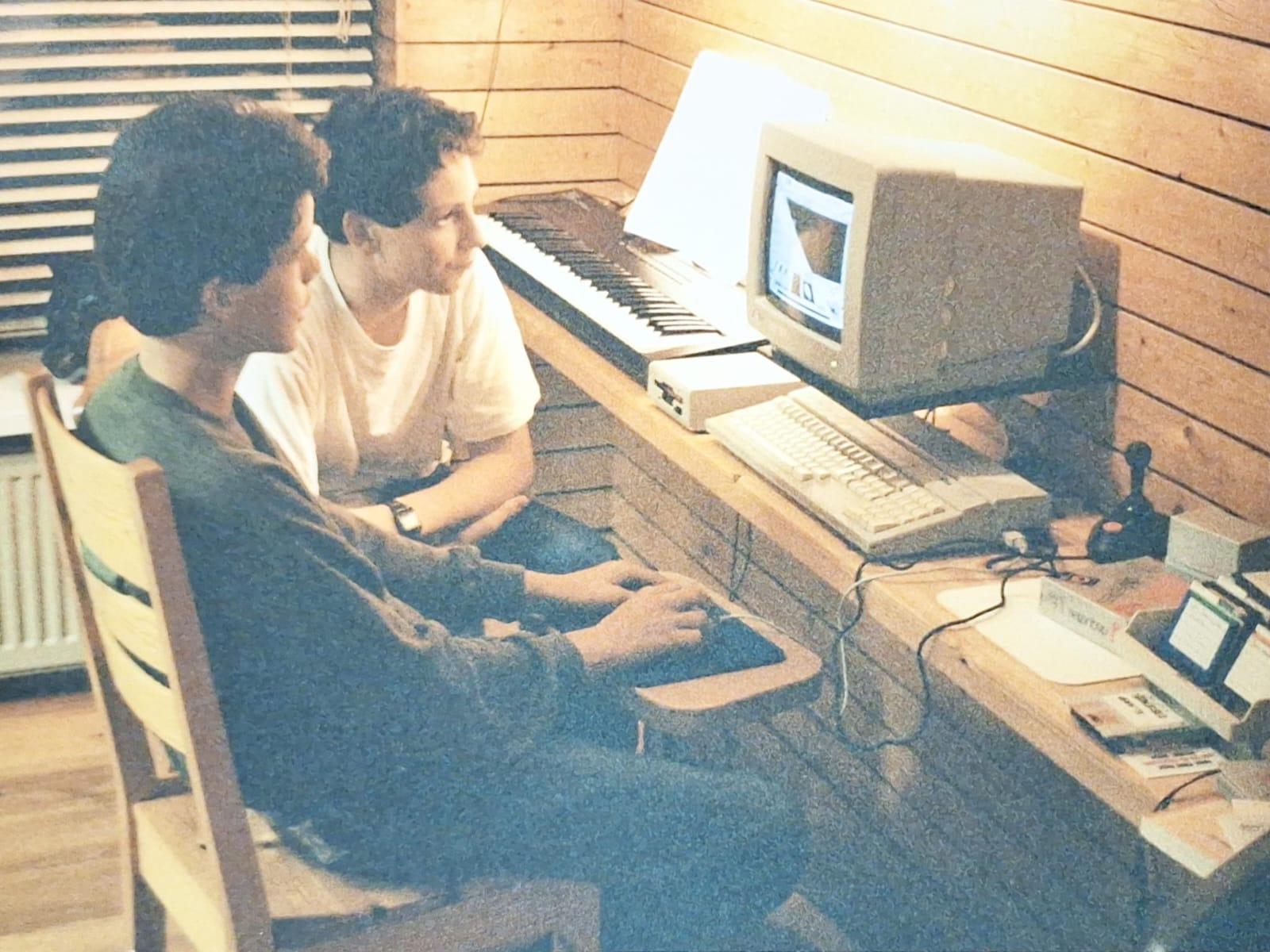 Roberto (rear) and I (front) playing Starglider 2 sometime around 1990
Later, we visited a few notable demo parties, among them a Sentry party in Breda, the Netherlands, and Fried Bits in Bremen, Germany. We made some great friends in the scene, some of whom we still keep in touch with today.
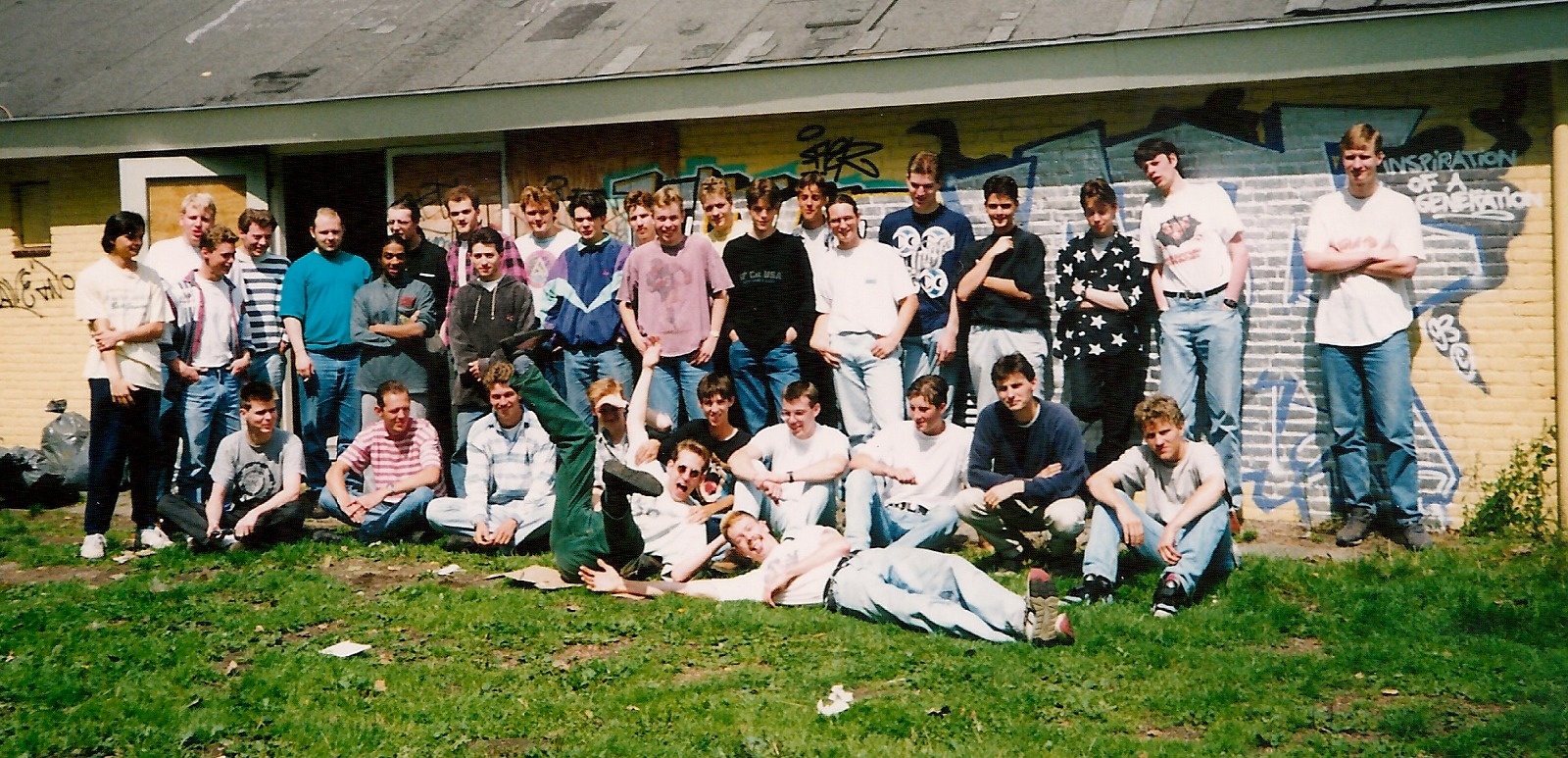 I (black t-shirt, center, standing) and Roberto (white t-shirt, center, standing) at a Sentry party around 1992
We used a few crew names over the years and we were also prone to changing our names, but at one point our crew name was Odyssey and we called ourselves Vulture (me) and Digital Coolness (Roberto).
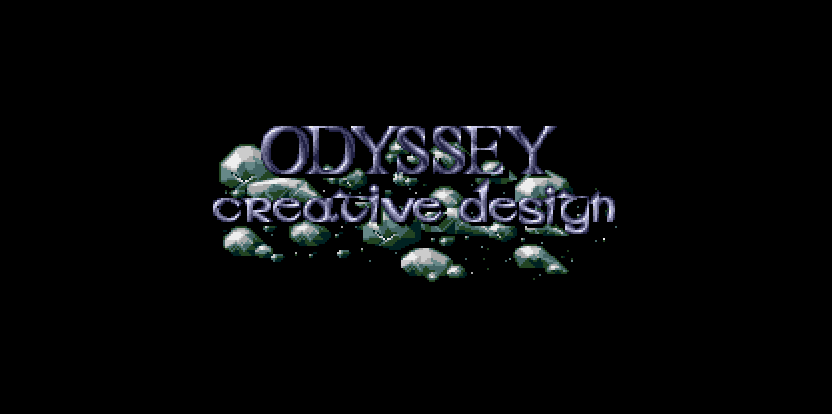 The Odyssey logo
This ultimately culminated in us creating the Symbiosis guest screen (YouTube video) for the famous Synergy Megademo. We’re still proud of this screen and very honored to have been asked by the Synergy people to contribute to their megademo, which is one of the most famous Atari ST demos of all time. The code and graphics were all done by us, the fabulous music was composed by Scavenger from Synergy.
Later, we changed our crew name to Dawn and our names to Zeme (I) and ManTra (Roberto), and we still use those names today.
The game
Although we never got to finish a full game, the dream of making a game remained…
Let’s fast-forward to the (near) present. In May 2025, I couldn’t hold back anymore, now that I had finally managed to get hold of a proper m68k cross-compiler setup on my PC, thanks to Thorsten Otto’s m68k-atari-mint cross-tools.
I had been working on some small projects a few years earlier, using a native C compiler in an Atari ST emulator, but I have to say that it is a real pain to work that way, especially when you are used to modern development environments. I have a lot of respect for those who work that way, but I really prefer working on my PC and then testing the game in an emulator.
So, I got to work and started writing the game. At the time of writing, roughly nine months later, the game is in pretty decent shape, and most technical features are working well. What’s mainly missing is content.
I’m not ready to reveal all the details or what it looks (or sounds) like yet, but I will be sharing some interesting details now and then.
This blog
Because I’ve had to jump through quite a few hoops so far, I wanted to share some of the things I learned. In this blog, you can expect a few posts to appear in the coming months, covering technical details of the game, as well as the design process and the creative process in general. I will also share some of the challenges I faced and how I overcame them, as well as some of the things I wish I had known when I started.
If at any time you want to contact me, check the social links in the footer. Or leave a comment below!
Up next
Continue reading with the next post: AI Statement